
What to Eat and Drink During a Long Car Journey
Quick Guide to This Article
A Long Journey Is Easier When You Do Not Overload Your Body
On a long drive, people often focus mainly on the route, traffic and arrival time. They tend to think less about what they will bring to eat and drink. Yet these small details can have a big impact on how you feel during the journey.
Heavy meals, too little fluid or long hours without food can make the journey feel more demanding. You may feel heavier, slower and less refreshed, making a long drive harder than it needs to be.
Food and drink are therefore not just extras for the journey. They are part of the overall travel rhythm, just like breaks, refuelling and route planning.
What to Eat on a Long Car Journey
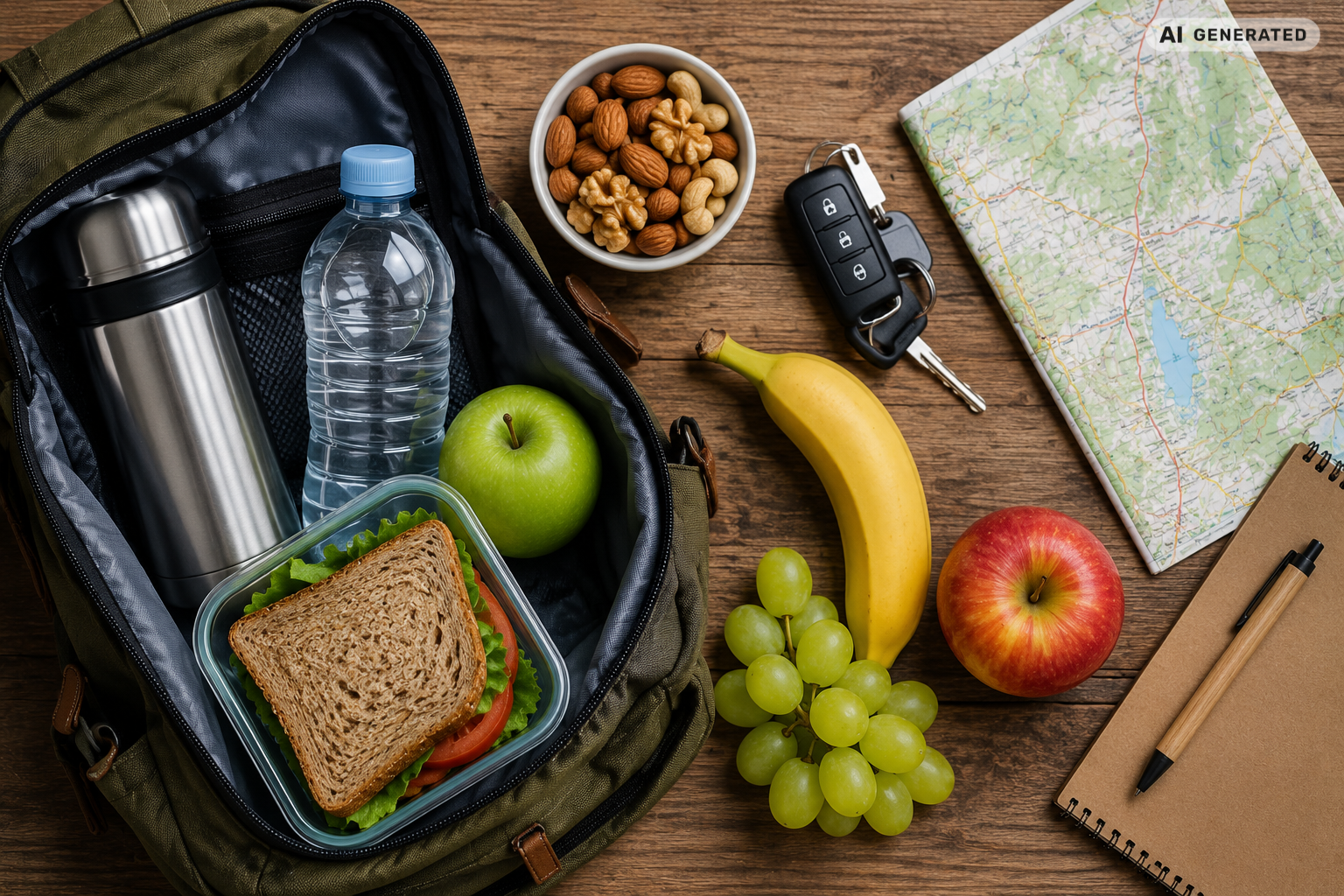
For a longer journey, it is usually best to choose food that is not too heavy, greasy or overly filling. The aim is not to burden your body while travelling, but to give it something simple, practical and easy to digest.
Food that can be eaten during a stop, does not leave you feeling heavy and does not make you tired after one large meal tends to work best.
Good options usually include:
- lighter meals and smaller portions
- practical snacks for a break
- fruit, vegetables or a simple sandwich
- food that is easy to transport
- something that does not leave you feeling heavy
- smaller snacks throughout the journey instead of one large meal
Why Hydration Matters So Much on a Long Drive
When driving, especially in summer or during several hours behind the wheel, it is important to stay hydrated. If you do not drink enough, you may feel more tired, sluggish and uncomfortable, making the whole journey feel more demanding.
Keep water within easy reach in the car before you even set off. It is better not to wait until you feel very thirsty, as thirst often means your body has already been lacking fluids for some time.
Drinking regularly helps you stay more comfortable throughout the journey. This is especially important for the driver, as a heavy-headed feeling, headache or sluggishness can unnecessarily reduce comfort behind the wheel.
Tip: Travel tip: keep a bottle of water within reach, but drink mainly during safe stops. In summer, bring more water than you think you will need.
What Studies Say About Hydration, Food and Attention
Nutrition and hydration are closely linked to concentration while driving. Studies suggest that even mild dehydration can affect mood, fatigue, headaches and certain aspects of cognitive performance. This matters especially on long journeys, when you need to maintain steady attention for several hours.
The European Food Safety Authority (EFSA) gives an adequate daily water intake for adults of approximately 2.0 litres for women and 2.5 litres for men from all sources, including drinks and food. Actual needs, however, vary depending on temperature, activity and individual circumstances.
Research into so-called postprandial sleepiness, or tiredness after eating, suggests that some people may feel more drowsy after a larger meal. Studies on prolonged monotonous driving after lunch indicate that meal size and timing may influence feelings of sleepiness while driving.
In practice, the message is simple: on long journeys, choose lighter food, drink regularly and do not underestimate the importance of breaks.
What Is Less Suitable on a Long Journey
Some choices can make the journey unnecessarily harder. That does not mean you cannot enjoy something tasty on the road, but on a long drive it is worth thinking about how you will feel an hour or two later.
It is usually better to avoid:
- very heavy or greasy food
- large portions all at once
- sweets as your main source of energy
- too much coffee without enough water
- not drinking enough
- trying to go for many hours without food or drink
Coffee and Energy Drinks: Helpful, but Not a Solution to Fatigue
Many drivers automatically reach for coffee or an energy drink during a long journey. They may provide a short-term sense of stimulation, but they are no substitute for sleep, water or a proper break.
The problem begins when coffee is used to override the body’s warning signs. If your eyelids feel heavy, your concentration is fading or you feel as though you are driving on autopilot, the goal should not be to mask the fatigue. You need to stop safely.
It is better to treat coffee as a small addition to a well-planned journey, not as the main strategy for getting through long hours behind the wheel.
Tip: ATgreen tip: pair your coffee with a short stop, some water, a stretch and a few moments outside the car. That break can become your own personal travel ritual.
Food and Drink Belong in Your Travel Plan Just Like the Route
Many drivers plan the route in detail but spend less time thinking about where they will stop, when they will drink or what they will bring with them. Yet these small details often determine how you feel during the second half of the journey.
When food and drinks are prepared in advance, you do not have to improvise when you are already tired, irritated or in a hurry.
It helps to:
- prepare your drinks in advance
- keep something light to eat within reach
- not wait until you are extremely hungry or thirsty
- combine eating and drinking with a short stop
- create your own rhythm during the journey
- keep a small travel break kit in the car
What Can Be Part of a Short Break During the Day
During a long journey, many people appreciate small rituals that help separate one section of the drive from the next and create a moment for themselves. During a stop like this, a simple addition that fits naturally into your personal travel routine can also be welcome.
A short break can be simple: stop, get out of the car, take a short walk, drink some water, have a light snack, stretch your shoulders and change your surroundings for a few minutes.
If you prefer a clean and simple option, ATgreen O₂ Classic may be a good choice. It is suitable for short breaks when you want an uncomplicated moment for yourself. If you would like to try several options on longer journeys and discover what suits you best depending on the setting, your mood and the time of day, the ATgreen Test Kit can be a practical choice.
ATgreen O₂ Classic
An aroma-free option for drivers who want a simple, unobtrusive addition to short breaks on the road.
View O₂ Classic →ATgreen O₂ Citrus Mix
A refreshing citrus option for summer journeys, road trips and breaks when you want to change the atmosphere around you.
View Citrus Mix →ATgreen Test Kit
A practical choice for drivers who want to try several options and find the one that suits them best for long journeys.
View the Test Kit →A Travel Break as a Natural Product Moment: Water, Light Food and ATgreen
On a long journey, customers are not looking for complexity. They want something compact, easy to use and natural to include in a regular stop.
That is why ATgreen inhaled oxygen fits naturally into travel content. It is not presented as a substitute for sleep, food or hydration, but as a small, practical addition that customers can include in their break.
First, stop safely. Then have a drink, take a short walk, breathe some fresh air and, if it suits you, enjoy a brief moment with ATgreen. It is a natural, easy-to-understand routine.
Tip: For the online shop: the combination of O₂ Classic + Test Kit works particularly well in this article. Classic is a clear and simple choice, while the Test Kit helps customers discover which option they may prefer for future journeys.
A Long Journey Feels Easier When Your Body Feels Comfortable
A safer and more enjoyable drive is not just about the car and the route. It is also about how you feel during the journey.
Food, drink, short stops and small regular rituals are among the simplest things that can make a big difference to how a long drive feels.
When you avoid overloading your body, it is easier to maintain a comfortable pace. A long journey does not have to feel like one continuous stretch of fatigue and discomfort.
Frequently Asked Questions
What should you eat on a long car journey?
Lighter meals and smaller portions are usually best, as they are less likely to leave you feeling heavy during the drive.
What should you drink on a long car journey?
It is best to keep plenty of water within reach and drink regularly instead of waiting until you feel very thirsty.
Why is it important not to overeat on a long drive?
Because heavy or overly large meals can increase feelings of tiredness, heaviness and overall discomfort during the journey.
Is it better to eat smaller amounts throughout the journey?
Yes. A long journey is often easier when you choose smaller, lighter meals instead of one large and heavy portion.
Which ATgreen product is suitable for a long car journey?
If you prefer a clean and simple option, ATgreen O₂ Classic may be a good choice. If you would like to try several options and find the one that suits you best, the ATgreen Test Kit can be a practical choice.
Does ATgreen replace hydration, food or rest?
No. ATgreen does not replace water, food, sleep or a safe break. It can only be part of a short personal ritual during a stop.
Choose Your ATgreen Option for Long Car Journeys
Choose the option that suits long car journeys, short stops and those moments when you want to create your own comfortable travel rhythm during the day.