
How to Stay Focused During a Long Car Journey
A long car journey is not simply about staying behind the wheel for as long as possible. It is about managing your attention, pace, body and mind, as well as planning ahead. Whether you are driving a car on a business trip, a van, a lorry, a bus or a company vehicle every day, staying focused behind the wheel is one of the most important things within your control.
Professional driving can be particularly demanding because tiredness does not always arrive suddenly. At first, you may simply feel a little less alert, react more slowly, notice fewer details, become irritable or realise that you have driven several miles almost automatically. That is why it makes sense to respond to declining concentration before tiredness becomes overwhelming.
Why Long Hours Behind the Wheel Are So Mentally Demanding
Spending several hours behind the wheel may look like a relatively calm activity from the outside. In reality, your mind is constantly working. You are monitoring traffic, road signs, navigation, speed, the distance between vehicles, weather conditions and the behaviour of other drivers, while also keeping track of your schedule, cargo, passengers or work responsibilities.
Professional drivers often have much more than a single short journey to manage. Their day may involve deliveries, time slots, mandatory breaks, traffic jams, diversions, waiting for loading, communication with dispatchers or dealing with passengers. Bus drivers also need to consider the comfort of the people on board, while lorry drivers work with heavier vehicles, longer braking distances and more demanding manoeuvres.
Tiredness behind the wheel is therefore not only physical. It is often mental too. Your mind remains in the same mode for a long time, your eyes stay focused on the road and your body remains in the same position. Gradually, driving can begin to feel automatic — and that is the moment to pay closer attention.
Common Signs That Your Concentration Behind the Wheel Is Declining
Many drivers wait until they feel noticeably sleepy. But concentration can begin to decline gradually and almost unnoticed. You may start yawning more often, find it harder to maintain a steady speed, make more steering corrections, miss a road sign or feel as though the last few miles passed unusually quickly.
Irritability can be another warning sign. If small things, other drivers, navigation or traffic suddenly start bothering you more than usual, it may be time for a break. The same applies if you find yourself reaching for your phone more often, losing patience, making poorer decisions or reacting more slowly than usual.
- frequent yawning and heavy eyelids,
- a sense of driving on autopilot,
- slower reactions to traffic situations,
- difficulty maintaining your lane or speed,
- increased irritability and restlessness,
- missing signs, exits or details along the route,
- constantly reaching for coffee, an energy drink or your phone.
If you notice these signs, trying to push through and keep driving is not the best approach. Take a safe break as soon as possible.
Professional Drivers Do Not Need Heroics. They Need a Routine.
For professional drivers, concentration is part of the job. Lorry, bus, van and company-car drivers cannot simply rely on the feeling that they will somehow make it to their destination. Long hours behind the wheel require a routine: planned breaks, regular meals, hydration, stretching, fresh air and respect for your own tiredness.
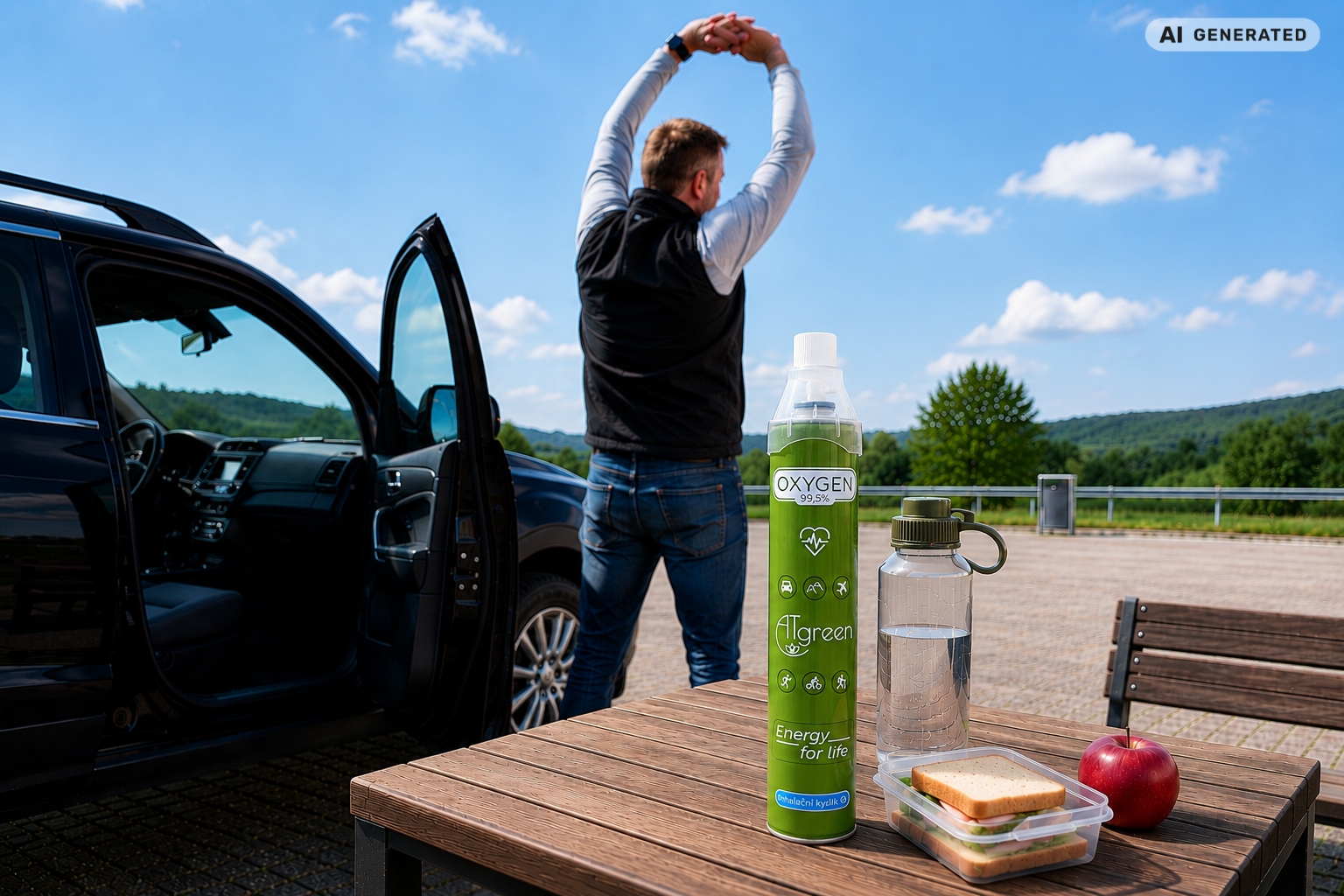
If you are genuinely sleepy, no supplement, coffee or short ritual can replace proper rest. The right thing to do is stop somewhere safe, rest and avoid driving when you are too tired. Short refreshment rituals can be part of a break, but they are not a substitute for sleep or a proper rest stop.
How to Plan Your Journey to Stay Focused for Longer
Your ability to stay focused can be influenced before you even get into the vehicle. If you leave late, without food or water, already mentally overloaded and with no extra time in your schedule, the journey can become more demanding. A long drive should not be a race. For professional drivers in particular, consistency, safety and arriving in good condition matter just as much as time.
Before a longer journey, check your route, expected stops, suitable places to rest and any time buffers you may need. If you drive professionally, remember that traffic, loading, unloading or waiting for passengers can change the rhythm of the entire day.
- allow extra time where possible,
- keep water and a light snack close at hand,
- plan safe places to take breaks,
- do not wait until you are completely exhausted before resting,
- before driving at night, consider whether you are genuinely well rested,
- when driving professionally, follow mandatory break and working-time requirements.
A Break Is Not Wasted Time. It Is Part of Safe Driving.
Many drivers tend to postpone their breaks. “I'll just make it to the next service station.” “Just one more hour.” “Only a few more miles.” But on long journeys, it is better to stop before your concentration noticeably declines.
A good break does not necessarily have to be long, but it should be a real break. Simply stopping while remaining in the cab and checking your phone is not the same. Your body and mind benefit from a change of pace: get out, walk around, stretch your back, drink some water, get some fresh air and spend a few minutes away from both the road and screens.
- Stop in a safe and permitted place.
- Get out of the vehicle and straighten your back.
- Drink some water.
- Walk around for at least a few minutes.
- Stretch your neck, shoulders, arms and legs.
- Put your phone away for a moment.
- Only then return to driving.
A break like this interrupts the monotonous rhythm of a long journey and creates a clear transition before the next section of your route.
A Quick Driver Reset: A Ritual Before the Next Part of Your Journey
Professional drivers often work in blocks: one section of the journey, a break, another section, some waiting and then more driving. These transitions are a good opportunity to create a simple routine that marks the beginning of the next part of the day. It does not need to be complicated — the important thing is that it is repeatable and safe.
For example: stop, get out of the vehicle, drink some water, walk around, stretch and take a few calm breaths before continuing. If you enjoy small personal refreshment rituals, ATgreen inhalation oxygen can also fit into this kind of break as part of a short moment away from driving.
The important thing is to use it only during a safe break, never while driving. Behind the wheel, your attention belongs on the road — not on handling any product or accessory.
ATgreen on the Road: Which Options Suit a Driver's Travel Routine?
ATgreen can become part of the travel kit for drivers who want to create a short personal refreshment ritual during a break. It can be kept in the cab, a work bag, backpack or car. The product is compact, simple to use and, depending on the option you choose, offers a clean, fresh or more distinctive aromatic experience.
ATgreen O₂ Classic
A clean, aroma-free option for drivers who prefer a simple, uncomplicated ritual during a break. Ideal for business trips, long journeys and everyday use.
View O₂ ClassicATgreen O₂ Citrus Mix
A fresh citrus option for summer journeys, long trips and breaks when you want a change of atmosphere after monotonous driving. A refreshing choice for daytime travel and an active travel routine.
View O₂ Citrus MixATgreen O₂ Impulse Blend
A more distinctive option inspired by coffee notes. It can suit drivers who enjoy a stronger aromatic experience as part of their personal ritual during a safe break before the next section of their journey.
View O₂ Impulse BlendCoffee, Energy Drinks and a False Sense of Security
Coffee can have its place in a driver's day. The problem comes when it becomes the only strategy. Another coffee may make you feel more awake for a while, but it cannot replace sleep, a proper break or movement after hours of sitting.
The same applies to energy drinks. They may make you feel ready to continue, but if you are genuinely tired, rest is the safer choice. Professional drivers need to recognise the difference between an ordinary dip in attention and genuine sleepiness. Drowsiness should never simply be pushed through.
A short reset during a break can be useful because it interrupts the monotonous routine rather than simply trying to provide a quick boost. Get out of the vehicle, change your surroundings, move your body, drink some water and create a clear break between two sections of the journey.
The Cab, Seat and Environment: Small Details That Matter
The environment inside the vehicle also matters during a long drive. An overheated cab, a poorly adjusted seat, clutter around the driver, a heavy meal or inadequate ventilation can all make a long journey less comfortable.
Before a longer journey, it is worth checking your seat, steering wheel, mirrors, temperature, access to water, navigation and anything else that might unnecessarily distract you while driving. Professional drivers know that small discomforts can become much more noticeable after several hours.
- ventilate regularly and avoid overheating the interior,
- keep water within reach, but handle it safely,
- avoid very heavy meals before driving,
- keep the cab organised,
- adjust your seat to maintain a comfortable driving position,
- during breaks, get out of the vehicle whenever the location allows.
Night Driving, Early Mornings and Monotonous Motorways
Night journeys, early-morning departures and long stretches of motorway can be particularly demanding. Monotony combines with a natural drop in alertness. The road can look the same for miles, traffic may be lighter and your mind can easily slip into an automatic routine.
This can be especially relevant for professional drivers who travel the same routes repeatedly. Familiar roads can make it tempting to pay less attention. Yet routine sections still require your full concentration.
If you notice your attention declining, take a break sooner rather than later. At night or early in the morning, do not wait until you become extremely sleepy. Stopping safely is better than risking another stretch of road while drowsy.
What to Keep in the Car for a More Comfortable Journey
A long journey can be easier when you have the right essentials close at hand. You do not need to carry unnecessary equipment — just a few practical items for everyday situations.
- water and a light snack,
- sunglasses,
- a power bank and charger,
- wet wipes,
- a comfortable sweatshirt or an extra layer,
- a basic first-aid kit,
- ATgreen as part of your break-time routine,
- a simple plan of safe places to stop.
For drivers who are not sure which option to choose, the ATgreen Test Kit can be a practical choice. If you prefer to keep several options close at hand at home, at work and while travelling, you can also explore the ATgreen Starter Pack.
What an Effective Break for a Professional Driver Can Look Like
Every driver has different circumstances. Bus drivers have passengers and timetables to consider. Lorry drivers have to manage parking, loading, unloading and regulations. Couriers and van drivers often work under time pressure. Even so, it is worth having a simple break routine that can be adapted to the situation.
- Stop safely and finish the driving section.
- Get out of the vehicle if possible.
- Drink some water.
- Stretch your back, shoulders, neck and legs.
- Take a short walk.
- Give your eyes a break from both the road and screens.
- Take a moment for your own personal refreshment ritual.
- Only then continue with the next part of your route.
The aim is not to waste time, but to create a clear and calmer transition before you begin the next section of your journey.
Key Takeaways
Staying focused during a long car journey should never be taken for granted. Professional drivers of lorries, buses, vans and company vehicles know that some of the most demanding moments often come not at the beginning of a journey, but after several hours of monotonous driving.
Planning, enough water, lighter meals, regular breaks, fresh air, movement and respecting tiredness can all be part of a safer driving routine. Small personal rituals can also help create a clear break in the monotony. ATgreen can be one part of such a break when used safely while the vehicle is stopped and simply as part of your personal comfort routine.
Create Your Own Refreshment Ritual During a Safe Break
Whether you drive a company car, van, bus or lorry, long journeys deserve well-planned breaks. Choose the ATgreen option that best fits your travel routine.