
How Do Pulse Oximeters and Oxygen Saturation Measurement Work?
A pulse oximeter is a small device that many people first discovered when they started thinking more about breathing, oxygen and the body. You place it on a finger, wait a few seconds, and suddenly a number appears — a number that seems to reveal something usually hidden: how much oxygen is carried in the blood.
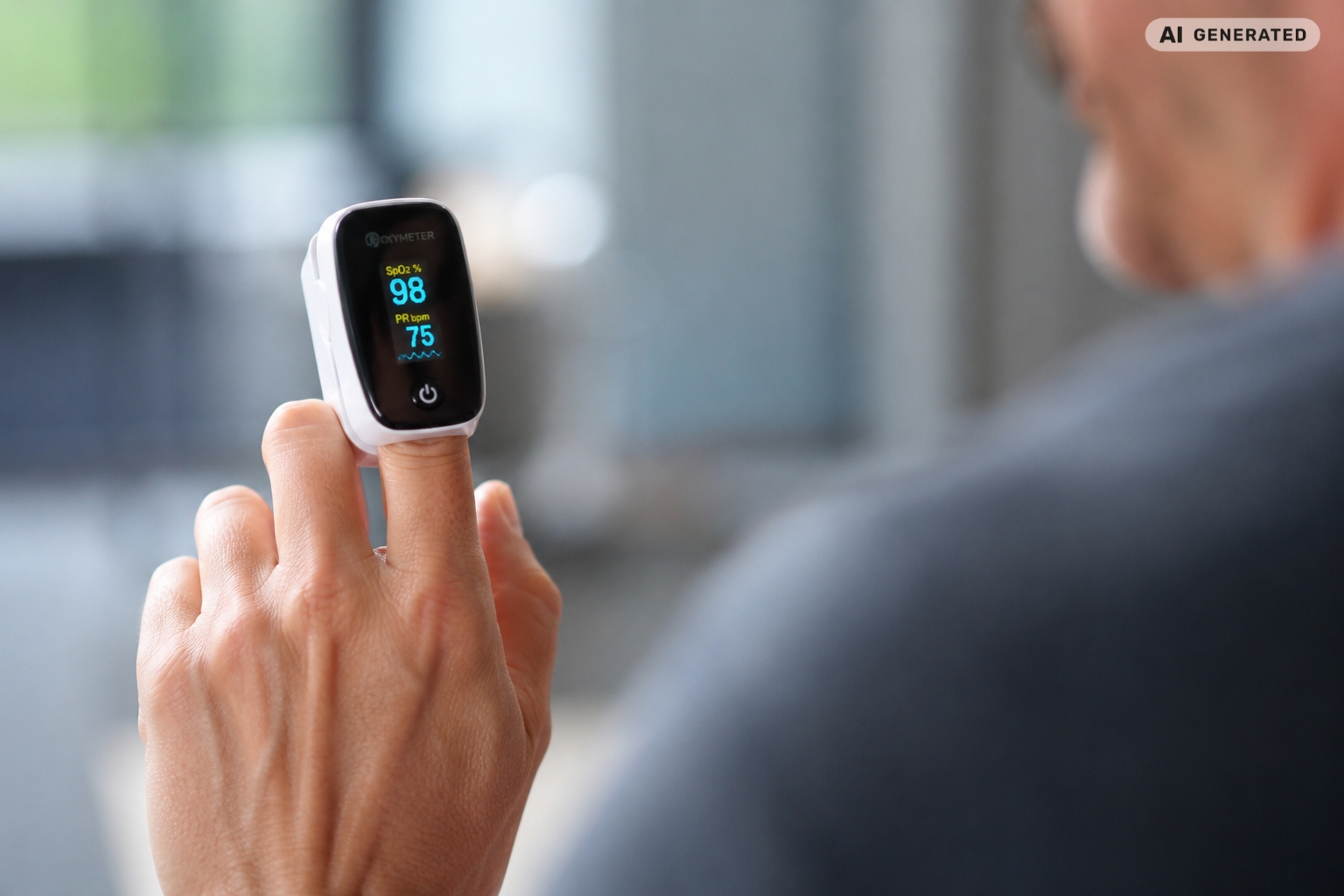
But what does that number actually mean? How can a device measure oxygen saturation without a needle, blood sample or pain? And why is it important to understand the difference between medical monitoring and everyday curiosity about how we feel? This article explains pulse oximetry in a clear, human and practical way.
How Pulse Oximeters Work and What Oxygen Saturation Means
Oxygen saturation, often shown as SpO₂, is an estimate of how much haemoglobin in the blood is carrying oxygen. Haemoglobin is the oxygen-transport protein found in red blood cells. In the lungs, it binds oxygen and then carries it through the bloodstream to tissues, muscles, the brain and organs.
A pulse oximeter does not directly measure how much oxygen you inhale. It does not tell you how energetic you feel either. It provides an estimate of arterial oxygen saturation. Useful, yes — but only when interpreted in context.
What is oxygen saturation?
After inhalation, oxygen reaches the tiny air sacs in the lungs, passes into the blood and binds to haemoglobin. Oxygen saturation describes what percentage of haemoglobin is carrying oxygen at that moment.
- SpO₂ is an estimate of blood oxygen saturation.
- Pulse oximetry is non-invasive.
- Cold fingers, movement, nail polish and poor circulation may affect readings.
- Unusual readings or breathing problems should be discussed with a medical professional.
How does a pulse oximeter work?
A finger pulse oximeter uses light. Inside the device are red and infrared light sources. Light passes through the finger and is detected by a sensor on the other side. Oxygenated and deoxygenated haemoglobin absorb light differently, so the device uses that difference to estimate oxygen saturation.
The oximeter also detects the pulsating part of arterial blood, which is why it often shows pulse rate as well as SpO₂. A stable reading requires stillness and a good signal.
When can readings be inaccurate?
Pulse oximeters are useful, but they are not perfect. Cold hands, weak circulation, movement, dark nail polish or artificial nails can weaken the signal. Some devices may also be less accurate at very low saturation levels.
- Warm your hands before measuring.
- Keep your hand still.
- Wait for the reading to stabilize.
- Look at trends, not a single random number.
Scientific context
Pulse oximetry is a well-established method in healthcare. Scientific reviews describe its speed, non-invasive nature and usefulness in monitoring oxygenation. They also emphasize its limitations: signal quality, motion, tissue perfusion and device quality all matter.
For everyday readers, the key idea is simple: the number is helpful, but it is not the whole story. Breathing, overall condition, symptoms and professional medical advice matter.
A small freshness ritual with ATgreen
If oxygen, breathing and daily freshness interest you, inhalation oxygen may be an interesting part of a personal lifestyle ritual. People use it while travelling, after sport or during long working days as a short moment for themselves.
ATgreen O₂ Classic
A clean, aroma-free option for a simple and neutral oxygen ritual during the day.
View O₂ ClassicATgreen O₂ Impulse Blend
A coffee-inspired aromatic option for long days, travelling or short freshness moments.
View O₂ Impulse Blend